

Gnist
Gnist advises and spars, especially with leaders, on the conditions for innovation. It is about people's engagement and thus the conditions needed for change and innovation to happen naturally. Besides our experience, we are informed in particular by positive psychology, supported by design thinking and ignited by dialogue and reflection.
We facilitate conversations about a sustainable working life, which in the long run make companies self-reliant. This creates better growth for the individual company and gives it the resilience to withstand future challenges.
We help create results and crack concrete challenges by thinking in terms of an optimal interplay between the “negative” in the form of challenges, problems and limitations and the “positive” in the form of strengths, resilience, hope and optimism.
Gnist is owned and run by Mads & Marianne Bab. Mads has more than 13 years of experience in consulting, a Master in Applied Positive Psychology from the University of East London and is also an external lecturer on the master's programme at Aarhus University/DPU. In 2013 Mads published the book Gnisten i arbejdslivet with Dansk Psykologisk Forlag.
Marianne has more than 15 years of experience as a project manager and holds an ICF-accredited coaching education.
Visit us at gnist.com (link), where you can read blog posts about leadership, strengths, a sustainable working life and more, buy strength cards and download free tools to learn more about yourself, your strengths, your leadership and much more.
You can also follow us on LinkedIn or Facebook.
INFORMATION
Gnist
Vestergade 49B
8000 Aarhus C
+45 81 61 39 39
mads@gnist.com
www.gnist.com
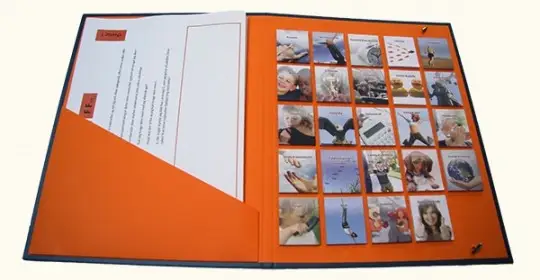
Our work with strengths is based on the 24 strengths from the VIA Institute on Character, which the psychologist Martin Seligman, among others, helped develop. Working with strengths is about recognising your strengths and putting them to use in your everyday life – in a natural and well-functioning interplay with the people around you.
To be clear: strengths are what strengthen us, what make us want to learn, give us the energy to handle things in a different way and to go further than expected. We humans tend to believe that our greatest potential for development lies in our weaknesses. Research has shown the opposite – knowing our strengths enables a more meaningful and inspiring development, with far greater potential than we think. Researchers around the world confirm that children and adults who live, learn and work based on their strengths experience more self-confidence and self-esteem, more energy in everyday life, less stress and more engagement in their learning and work.
Based on the 24 strengths, we have created two products. We have developed strength cards for both adults and children (from approx. 7th grade and up). Each of the 24 strengths is represented on a strength card, and each card contains an image that visualises the strength and a short description of the strength and how it is expressed in everyday life.
The second product we have developed is strength Post-it notes, not for writing on, but for working with strengths in new, process-oriented and development-oriented ways.
Collaboration
Gnist has entered into a collaboration with University College Lillebælt to turn strength-based theories and research into practical tools for use in teaching, guidance, teamwork and school leadership. We call the collaboration Styrkeværkstedet (the Strength Workshop). This way of putting the latest research into play is meant to help the school sector create awareness of strengths as an important resource and design tools to develop well-being and a desire for learning and development.
A strength-based approach makes it possible to increase pupils' progress and well-being, and organisations that work in a more strength-based way experience more resilience, creativity and, on the whole, better results.
Jam Sessions
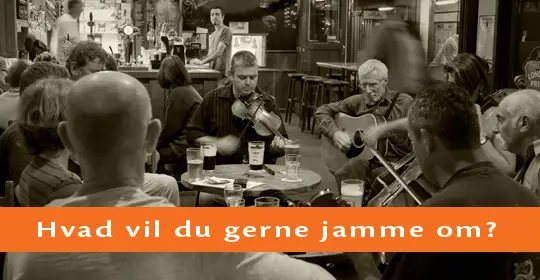
At Gnist I regularly hold Jam Sessions (Link on Jam Session to: http://gnist.com/jam-sessions/). A Jam Session combines the traditional inspiration meeting with the idea of co-creation (link on co-creation to: http://da.wikipedia.org/wiki/Co-creation)
At a Gnist Jam Session I inspire with the latest ideas, thoughts and movements within innovation, leadership, sales, HR, motivation, positive psychology and much more. More importantly, though, a Jam Session is a unique opportunity to bury business as usual and, together with the other participants, rethink solutions better than anyone could have done on their own.
A Gnist Jam Session is often themed and can be as general as leading generation Y or as specific as smart ways to ensure the implementation of an employee survey or the sale of a particular service. What all Jam Sessions have in common is that new ideas are always developed and all participants go home with concrete solutions.
See a selection of the themes we jam about below or go to www.gnist.com/jam-sessions and get fired up.
SKAT
At Gnist we are running a project on competence clarification and career development for HK employees in the Danish Ministry of Taxation.
How do we make the HK employees ready for change? Gnist has developed tools and exercises that help them get through this process of change and feel ready for their new future.
We humans often think that changes in our working life and career are about setting big goals and letting those goals guide all our actions. When we believe we can jump from our immediate wish for change straight into a single decision and action that completes the process, we remain naive about the time it actually takes to change behaviour. We forget that changing ourselves is a learning process like all the learning processes we have experienced throughout our lives – that through action we learn whether a behaviour is appropriate or not.
This experimental approach to change, which is our starting point with SKAT, is based on exercises and activities within positive psychology. The exercises help create new patterns for one's thoughts, feelings and actions in working life, which slowly change so that they are more in line with one's strengths, skills and opportunities.
In one of the exercises, groups created a landscape of the future using different picture cards that symbolise how they feel. This exercise helps make the unclear clearer, as they get to look openly into the future. Interestingly, most realised that the future does not exist in just one version, but can develop in several different ways. Research shows that when people take a closer look at their fears instead of looking the other way, those fears are often proved wrong, or at least become more nuanced.
When you see the future not as one path but as several, it also becomes easier to find a professional role you can play in the future. Instead of seeing your job opportunities along a single track, more opportunities become visible.